


 Français


Highly pathogenic avian influenza (HPAI) is an on-going risk for Canadian chicken production. With the data collected on infected premises to-date, we’re able to see trends in potential risk factors for virus introduction into the barn.
HPAI Biosecurity Risks for Commercial Farms: from low (green) to high risk (red)
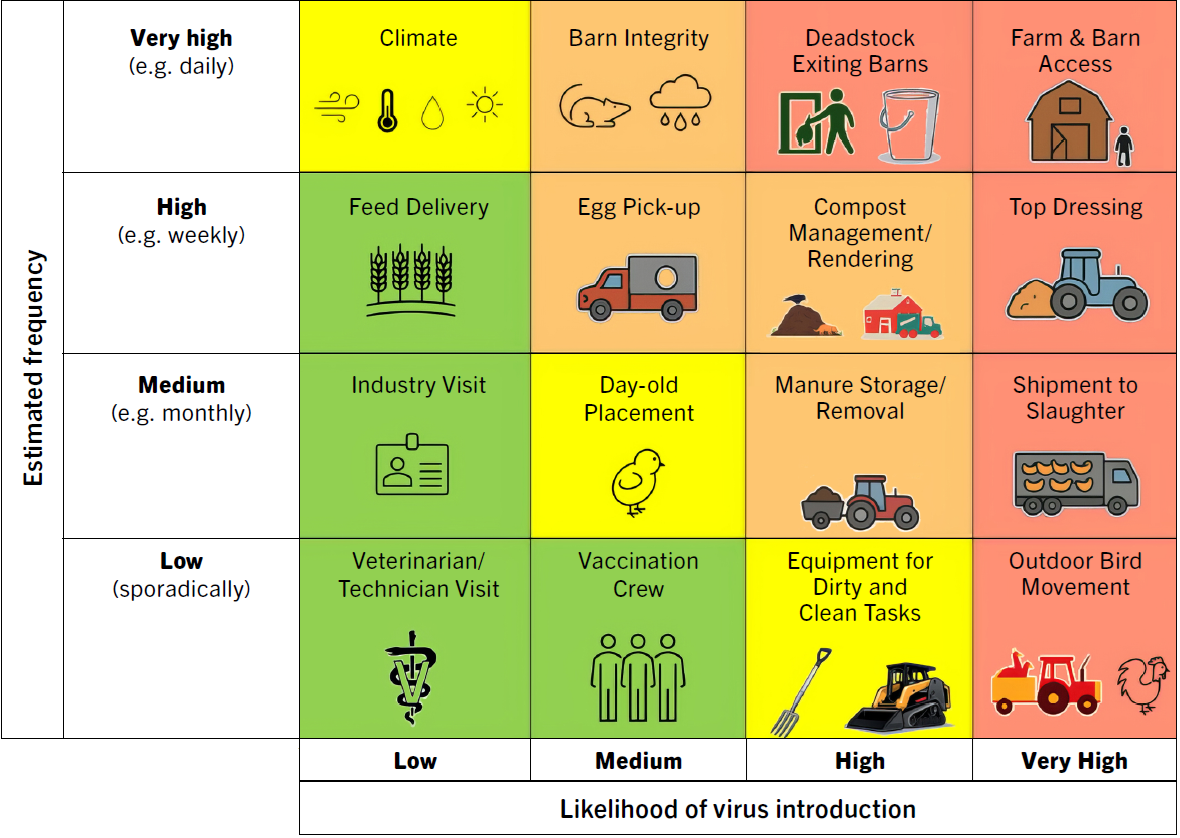
The estimated frequencies are based on common activities across species and production types which may vary and impact the risk. The likelihood of virus introduction is based on the frequency that these risk factors have been observed on infected premises.
Broiler farms: most frequently observed potential risk factors*
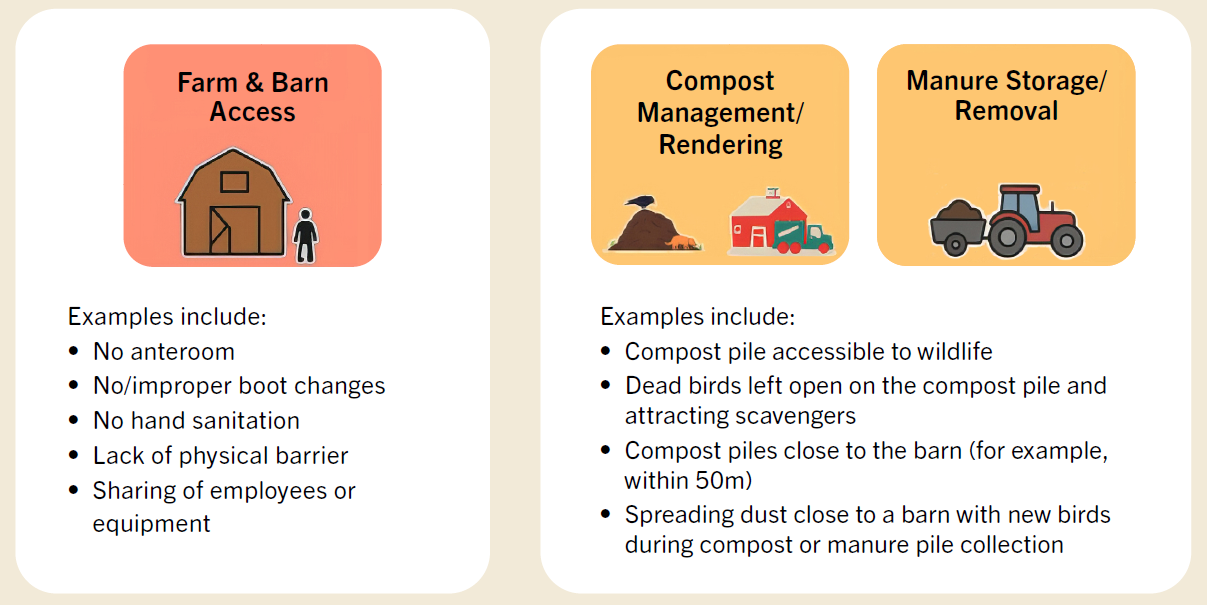

*Based on data collected from September 2024 to April 2026 on infected premises that had broilers.
These observations were made on infected premises. Several risk factors were validated in case-control studies performed in different provinces and species.
There are a number of ways that HPAI and other pathogens can enter a barn, either by physical movement (e.g. via personnel, equipment, or pests) or through short distance windborne spread.
While there is no silver bullet solution to prevent pathogen entry, the risk matrix developed from observations on infected premises provides a good summary of factors to evaluate and explore.
Best practices for avian influenza prevention
