The Raised by a Canadian Farmer On-Farm Food Safety Program has been amended to require physical barriers at the barn entry. More information on this new requirement can be found here.
Each barn will require its own design based on the amount of space and the entry protocol.
Here are some examples to consider how different farmers have incorporated a physical barrier into their entrance rooms.
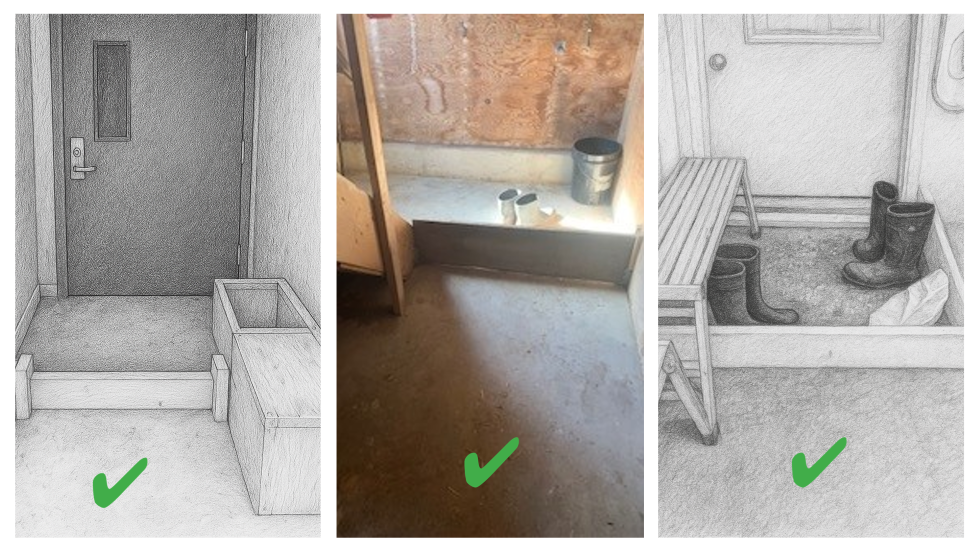
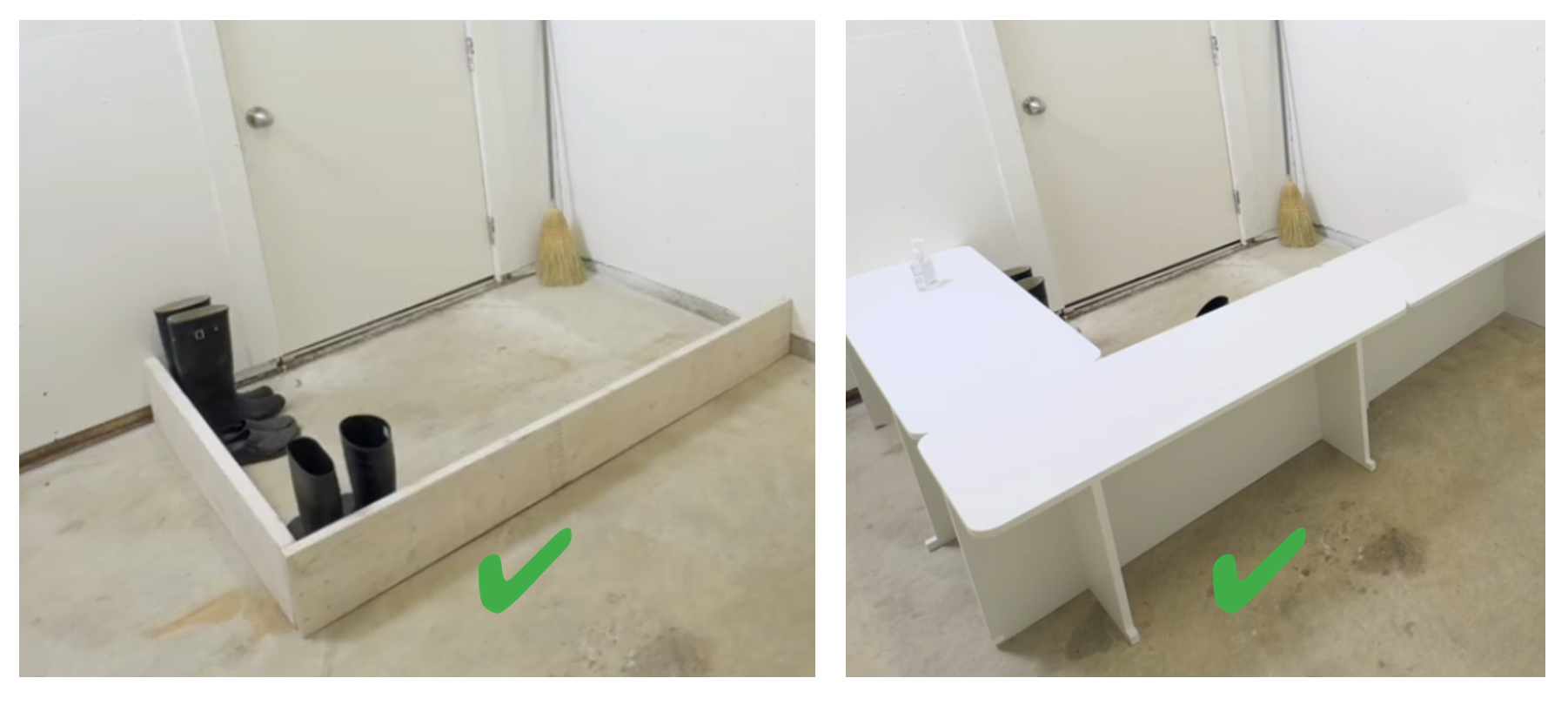
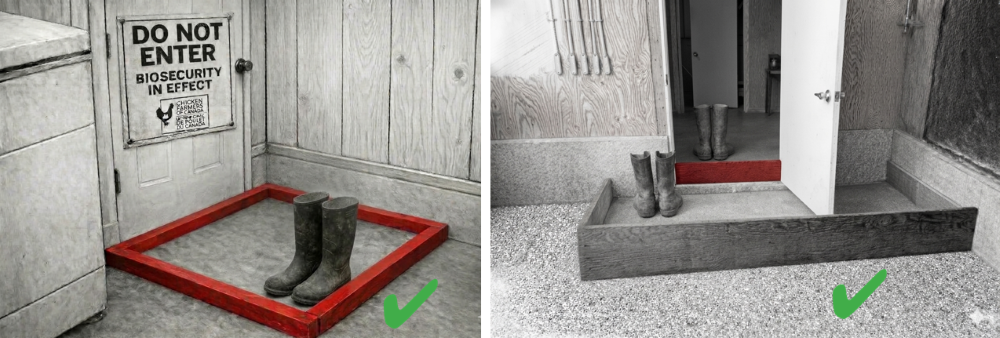
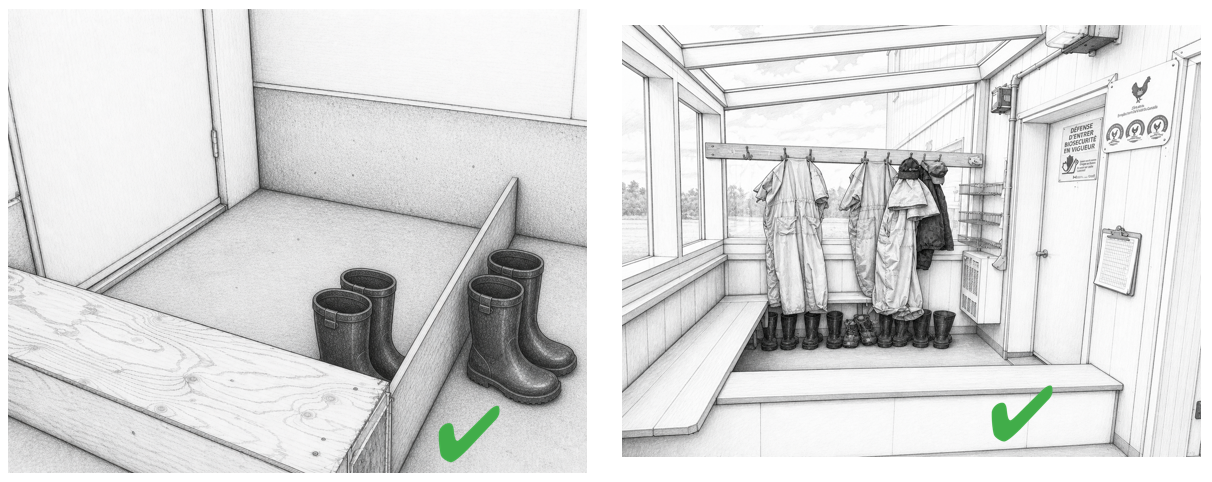
Examples of effective physical barriers:
- These barriers extend from wall to wall so people can’t walk around the barrier.
- These barriers are flush to the ground to prevent dust and debris, which can contain harmful viruses and bacteria, from contaminating the RA.
- The CAZ footwear and RA footwear can’t touch each other underneath these barriers.
- Several of these barriers incorporate a bench for people to sit and change their footwear – which is an excellent practice to help reduce the risk of cross-contamination.
- When used correctly, dirty boots stay on the dirty side and clean boots on the clean side, while socks don’t touch the ground on either side of the barrier.





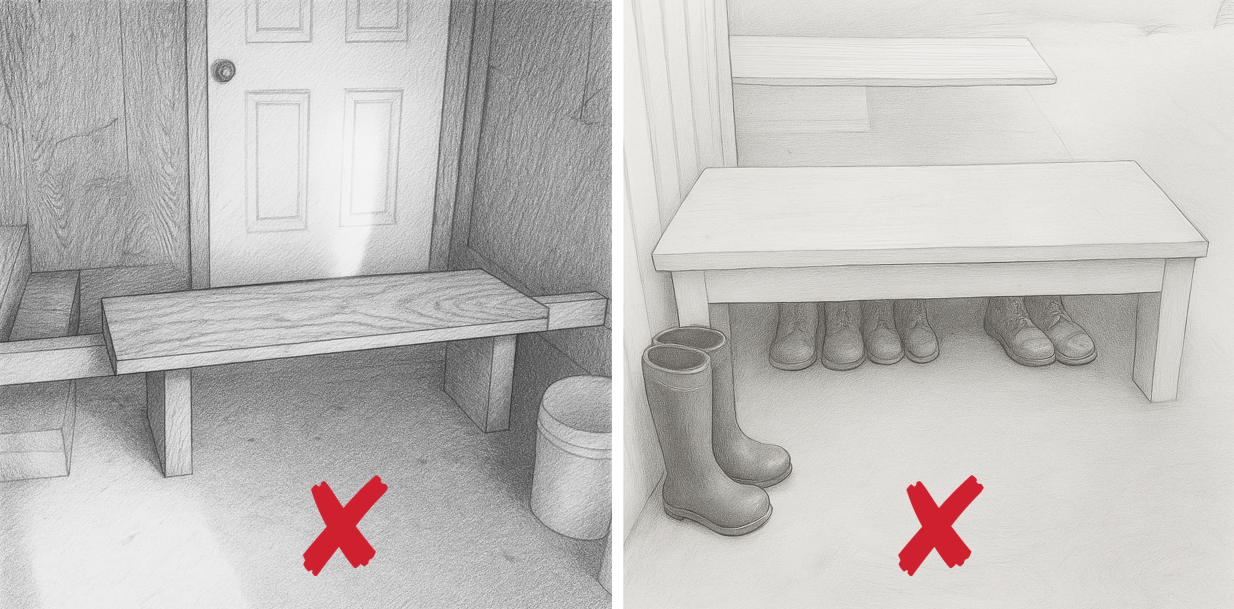
Examples of non-effective physical barriers:
- Some of these barriers don’t extend from wall to wall, making it easy for people to avoid using the barrier or changing footwear.
- These barriers are open underneath the seat (i.e. they are not flush to the ground). As a result, dust and debris, which can contain harmful viruses and bacteria, can contaminate the RA.
- With these barriers open underneath the seat, the CAZ footwear and RA footwear are stored very close to each other, making it easier for contamination to move between the two zones.




 Français