


 Français


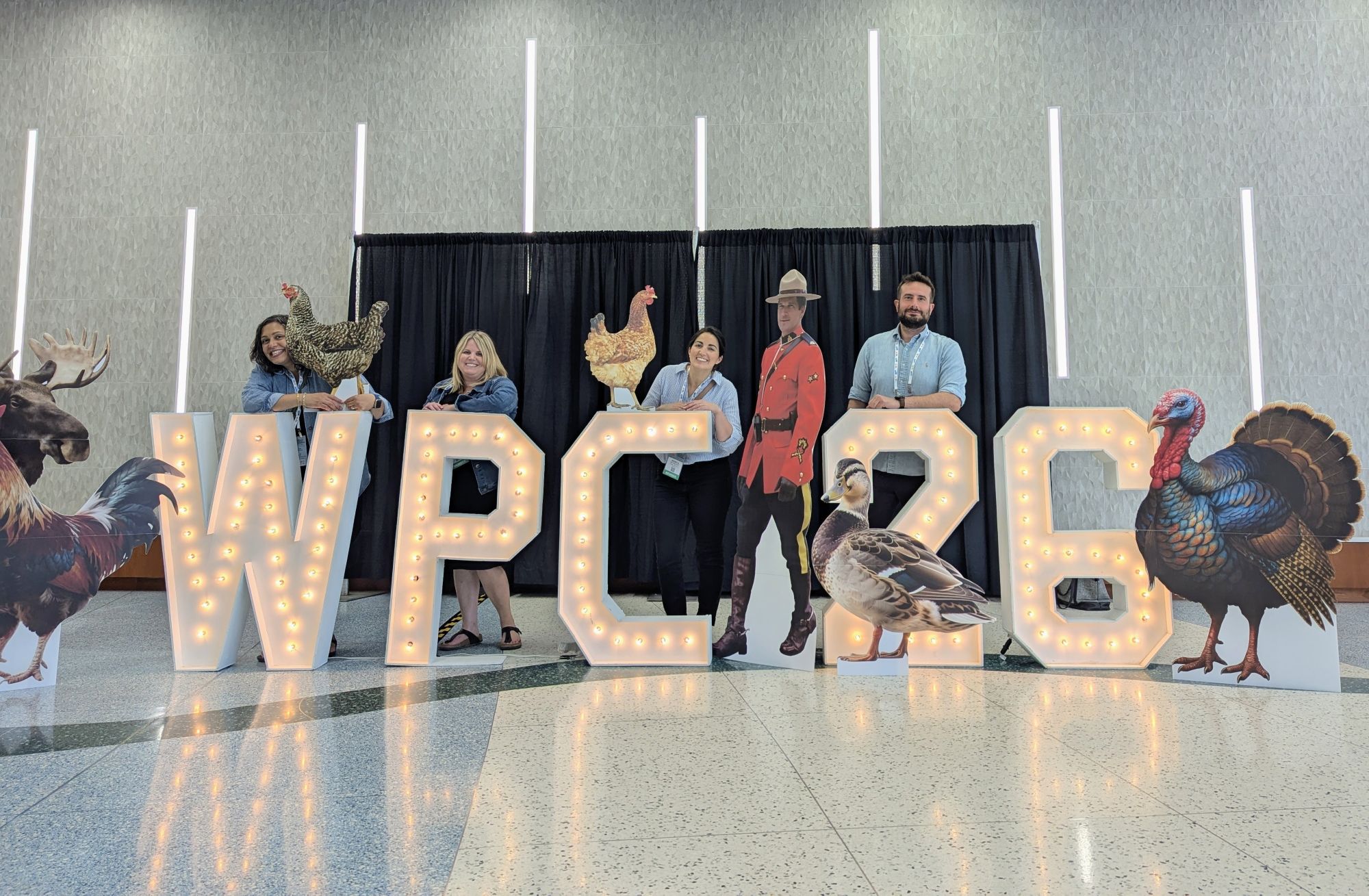
Every four years, this meeting brings together poultry scientists and experts from around the world to share research, new ideas, and discuss scientific and practical advances. Canada hosted this year’s congress in Toronto with over 2,000 attendees representing 66 countries – including researchers, industry professionals, government, and the wider poultry sector. Chicken Farmers of Canada (CFC) provided graduate student travel awards to individuals studying poultry science – Megan Chicoine (University of Montreal) and Asha Ranaraja (University of Saskatchewan) were the recipients. CFC staff were also at the Congress to soak up the latest in poultry research relevant to our sector, and connect and share ideas with others in the industry.
A keynote presentation was provided by Dr. Frank Mitloehner from the University of California, Davis, who spoke about the expected increase in demand for poultry products by 2050. He highlighted a global study looking at pathways to reduced emissions through interventions on both the supply and demand sides of animal production. This study broadly found that improved productivity, breeding, and animal health can have a greater impact on lowered emissions than dietary changes like lowering animal protein intake. Poultry is among the most resource-efficient livestock species and has seen tremendous improvements in productivity along with lower environmental impacts, making it well-positioned to meet growing protein needs. However, continued innovation is essential to meeting future sustainability goals. Dr Mitloehner emphasized that trust is the most important thing our sector currently has with the public – we all need to play a part in continuing to build and maintain it for future growth.
PhD student André Diler, from the Plateforme IA-Agrosanté (PIAAS) at the Université de Montréal, presented preliminary results from a project funded in part by Chicken Farmers of Canada. The project is evaluating whether artificial intelligence (AI) could be used to predict and reduce cellulitis rates in broiler chickens. In 2025, 10 million broiler chicken carcasses were condemned, with 72% attributed to cellulitis which is caused by E. coli entering the skin through wounds or scratches. André noted that one of the main challenges today is not the technology itself, but the data ecosystem – AI can only reach its full potential when supported by big data. Achieving this requires a higher number of recruited farms, the collection of high-resolution data (e.g., hourly sensor measurements), and the systematic recording of health-related information such as antimicrobial use, mortality, and other production and animal health variables. Their preliminary results from farms and processing plants in Quebec suggest that heat stress in birds may serve as an indicator for predicting cellulitis rates. Barn temperature, humidity, and deviations from the birds’ ideal comfort zone all appear correlated with cellulitis occurrence. However, the researchers need stronger, more consistent results before offering concrete interpretations or recommendations to farmers. The next phase of the project will focus on incorporating additional sensor companies and processing plants, along with new variables, to improve the predictive performance of the models and better understand the factors associated with cellulitis.
A small sampling of some other research we learned about:
This only scratches the surface of the many research projects presented over the four-day conference. A full listing of the presentation abstracts can be found here, and stay tuned to our next newsletter for more conference highlights.
